Socrates on Intellectual Humility
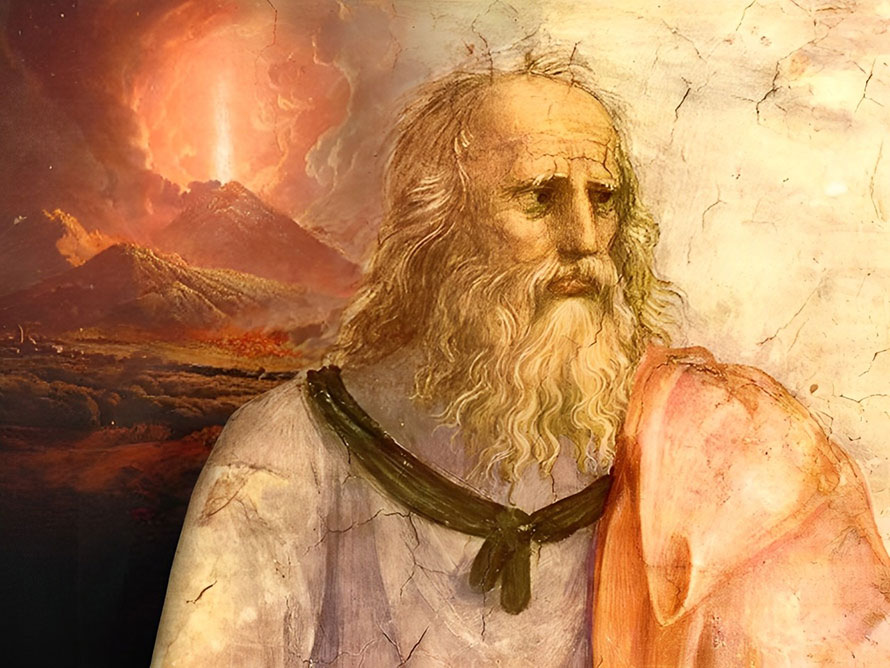
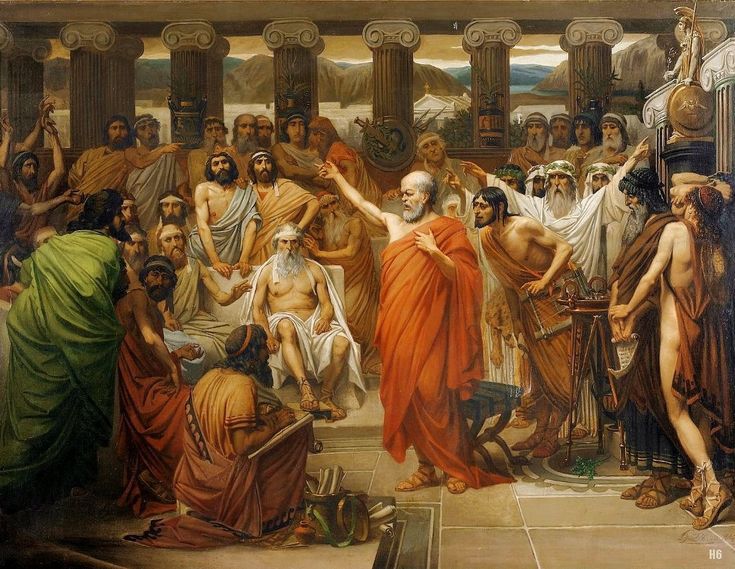
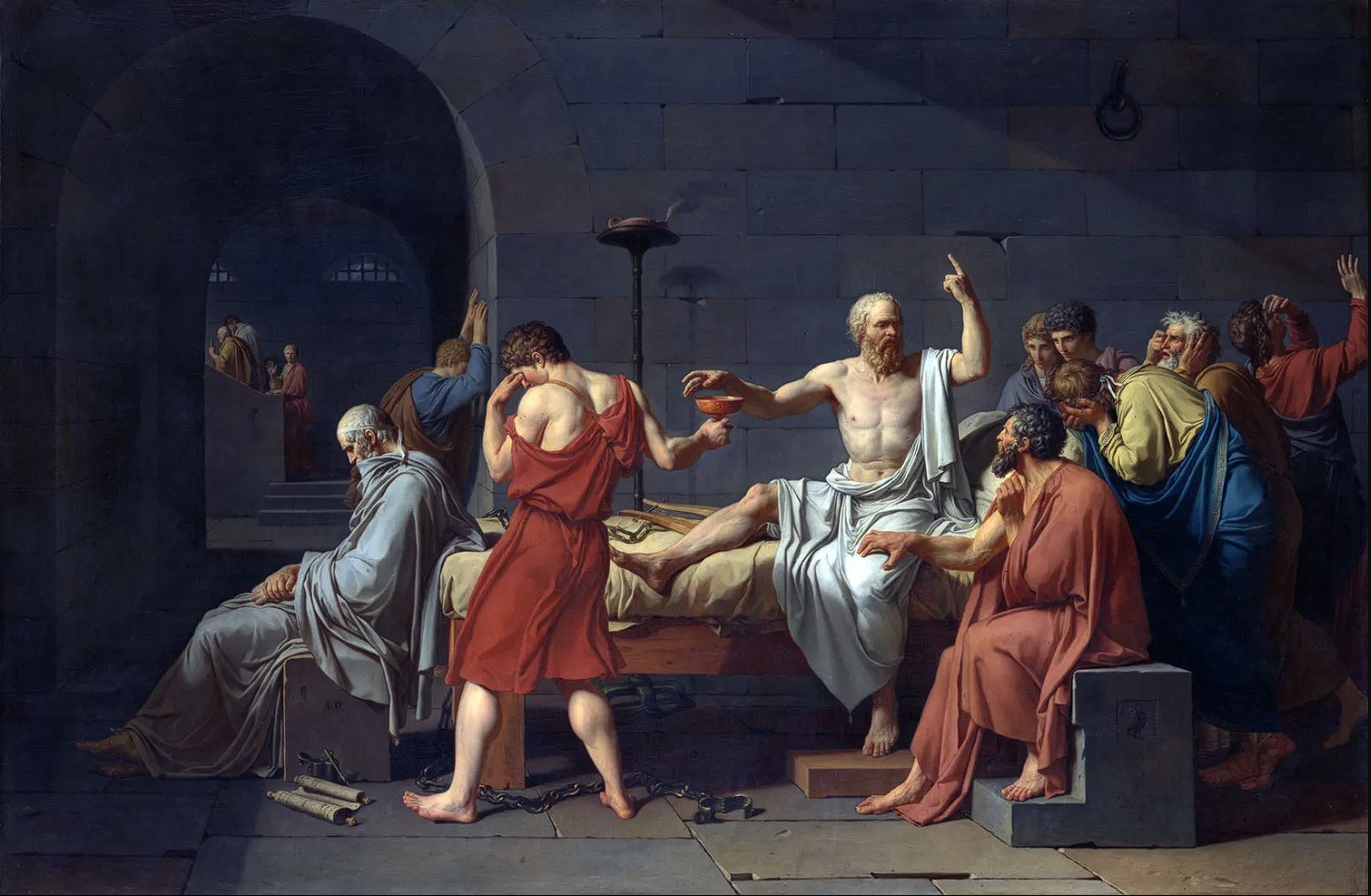
Socrates never wrote anything down. Most of what we know comes from his students, most notably Plato. In the Apology, Plato recalled Socrates’ staunch defence of his name and “evil fame” he accrued during his time in Athens. When defending himself, Socrates told a story where a friend of his, Chaerophon, went to the oracle at Delphi - basically a medium for the gods - and asked if there was anyone wiser than Socrates. The oracle replied that there was no-one wiser than Socrates. When Socrates heard of this, it made him mad for he did not think he had any wisdom.
So Socrates, being Socrates, thought hard about how he could prove the oracle wrong. He devised a method to go out and test if there is anyone wiser than him. Here he practiced his socratic method. Similar to dialectical reasoning (a method of argument through logical discussion), the socratic method sets up a premise and then this is tested using a series of logical processes. For example, one might believe that “all swans are white.” Through dialectical reasoning, this belief can be tested by showing: 1) there’s no way to be certain of this belief, and 2) evidence exists of non-white swans.
Socrates then goes and talks to the wisest person he could think of, a politician in Athens, and applies his socratic method. After conversing with him he realises that this person, who everyone thought was wise, actually knew nothing. Being the annoying guy he was, Socrates tells him that he was not wise and thus made an enemy.
At this point, Socrates is thinking to himself, “Well, although I do not suppose that either of us knows anything… I am better off than he is — for he knows nothing, and thinks that he knows. I neither know nor think that I know. In this latter particular, then, I seem to be slightly more sophos (wise) than him.”
He doesn’t stop there. He goes to the next wisest politician, applies his method, and realises the same thing - they don’t know anything! And, for all his trouble, he made more enemies. Poor Socrates.
Socrates is now at the stage in his investigation where he was “conscious that I know nothing at all”. So he decides to visit artisans and poets, who know many things he didn’t know and so they had to be wiser than him, at least in those matters. He observed that those that were good at their work thought that they knew all sorts of things but actually this “defect overshadowed their wisdom”. In short, people that were good at their work, and respected at what they do, were in fact demonstrating a lot of intellectual ignorance. When sufficiently questioned, they ended up demonstrating their lack of wisdom.
At the end of his investigation, Socrates concluded that rather than having the knowledge and ignorance that these people had, he was better off as he was, a man that knew nothing at all. He went on to devote his life to prove to those that think they are wise, that they are not wise at all - a journey he took for the love of truth and wisdom. An honorable, but annoying, endeavour that left him in utter poverty and a lot of enemies.
To summarise, the socratic method is the questioning and testing of ideas to arrive at the truth. Socrates used this method to prove that those that were respected and wise in society were in fact not wise at all. He dished out a bit of intellectual humility and made a lot of enemies along the way.
Criticisms and Counterarguments
The biggest criticism of the socratic method is that we never actually heard it from the horse’s mouth - so to speak. We know of Socrates’ teachings through his students, and the story I shared above is from the Apology. From my reading I’m not too sure when Plato actually wrote it, it’s suggested to be sometime between 395-390 BC. If that’s the case, then Plato had one hell of a memory to recall all of that! It’s likely the text in the Apology may be biased towards Plato’s views, and him been a student and admirer of Socrates probably played a part in his writing.
Socrates had other students who wrote about his trial, such as Xenophon, who had slightly different accounts of the trial.
Another criticism of the socratic method is that it does not actually build upon any existing knowledge. Rather, it takes existing knowledge and tries to achieve the truth. Which is admirable, but not entirely constructive.
Let’s take an empathetic point of view of the participant being questioned - they will be undergoing a very humiliating experience by having their knowledge and beliefs challenged. Of course, with sufficient questioning, you will find flaws in their knowledge and beliefs but does this necessarily mean they are not wise? Additionally, this humilating experience may lead to the participant being defensive and not open to sharing the truth. It can be counterproductive. In the case of Socrates, it ended up with him being put to death.
So whilst the method has its use, in developing critical thinking and a reflection to one’s own beliefs, it can create an environment that alienates and humilates the participant. I’d like to think lovers of wisedom and seekers of truth, such as Plato, were more receptive to this method - which may be why they followed Socrates. But those who were well established and respected in their domains might have found this method to be a threat.
Relevance to Modern Society
I was thinking about how to relate this to modern society, and I wanted to have a contemporary household name to use as an example. Somebody that did something extraordinary, and then went on a bit of a self-reflection journey to almost oppose their own achievements. Somebody who displayed a lot of intellectual humility. That somebody is J. Robert Oppenheimer. For those that don’t know, he’s also known as the “father of the atomic bomb”.
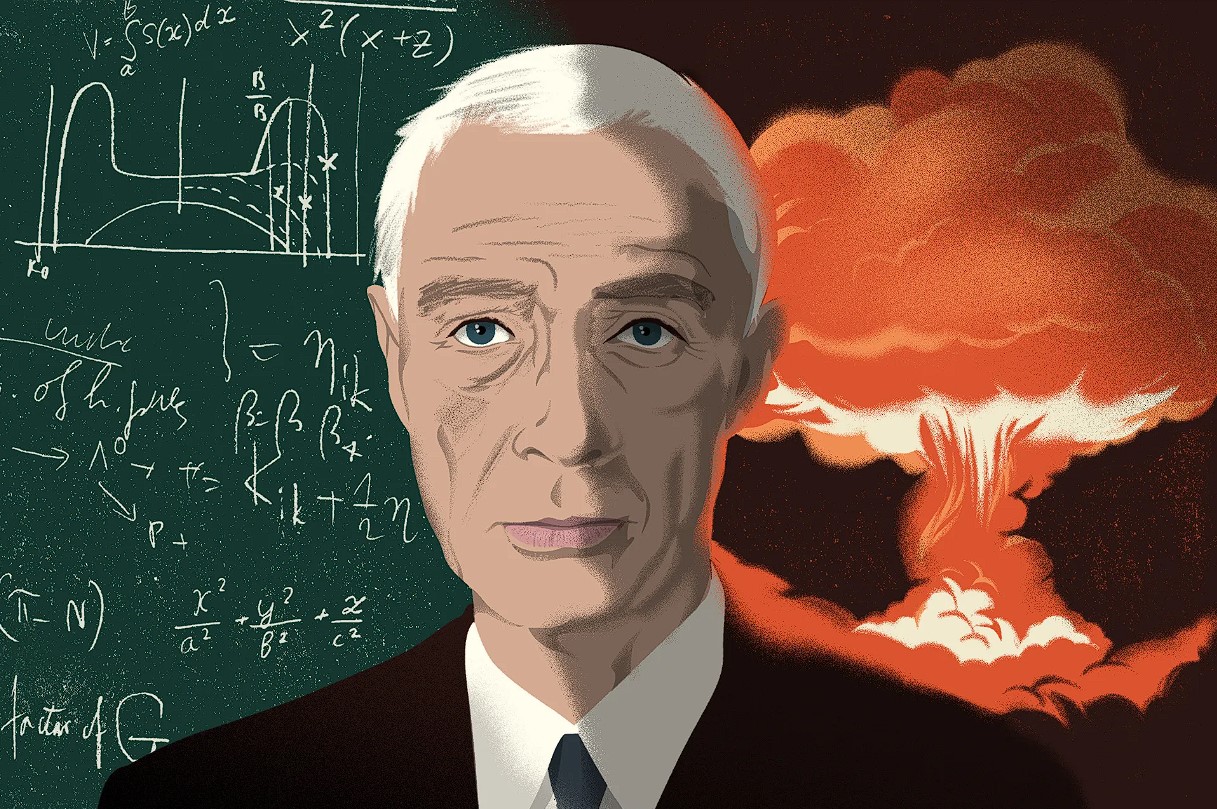
Oppenheimer was a, possibly the, key figure in the Manhattan Project - a US research project that developed the first nuclear bombs near the end of World War II (WWII). Oppenheimer was a brilliant physicist who led this project, recruiting some of the best scientists and mathematicians of the time to work on the project. The rationale behind this project was incredibly complex and not as clear-cut as we may think. The scientists on this project were doing this out of scientific curiosity and the great intellectual challenge. Obviously, the larger context was that there was fear that the Germans were also developing a similar weapon and building it first would end the war sooner.
On the day of the Trinity test, following a successful test, Oppenheimer said he remembered the famous quote: “Now I am become Death, the destroyer of worlds.” Following this, his whole demeanor changed. Where before there was not too much concern about building a weapon of mass destruction, now that is was built, there was an emphasis of the ethical implications of their work. It is said Oppenheimer became quiet, withdrawn, and ruminative.
Following the end of WWII, and the use of the atomic bomb on Hiroshima and Nagasaki, Oppenheimer became a vocal critic of the military-industrial complex, and the dangers of nuclear weapons. This is the very man who fathered the atomic bomb, yet was against its use. To me, it seems like a honest display of intellectual humility.
If he had examined thoroughly his own knowledge and beliefs before building the atomic bomb, as he had done after the war, would he have still helped build the atomic bomb? Perhaps this is where the socratic method would have been most valuable - in questioning not just what we can do, but what we should do. What do you think?
 Philosophy Profiles #1: Socrates