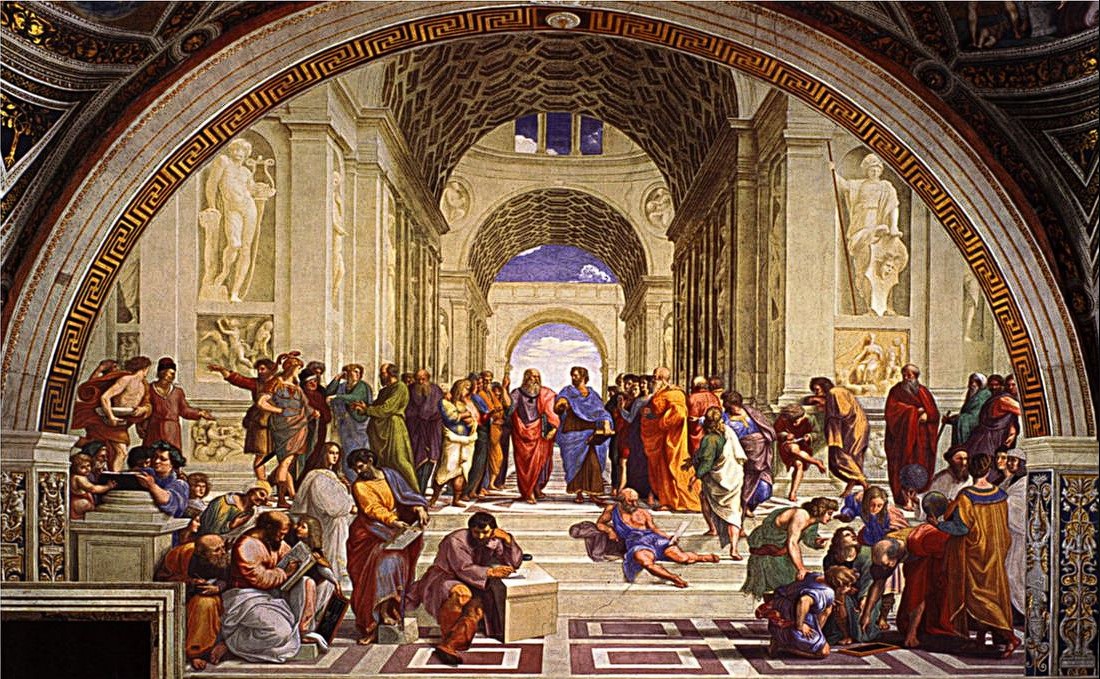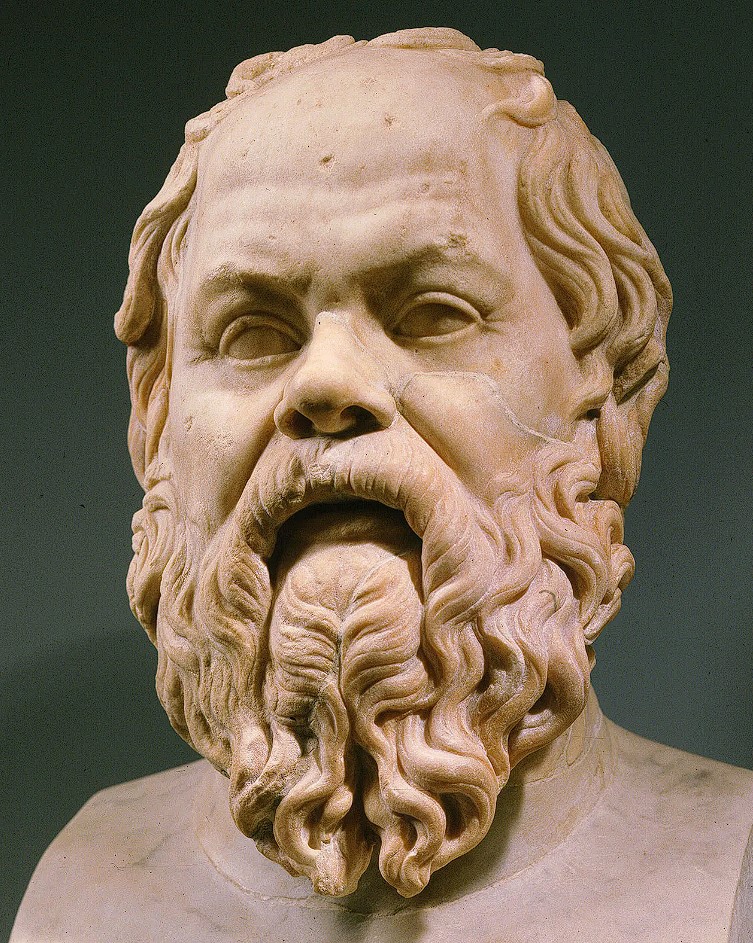
Socrates (470-399BC)
Historical Context
Era
Ancient Greece - The Classical Period
Location
Athens, Greece
Major Historical Events
- The Peloponnesian War - ending with the defeat of Athens (431-404BC)
- The Golden Age of Athens - Pericles’ rule (461-429BC)
- The trial and death of Socrates (399BC)
Social and Political Climate
It was a prosperous time in Athens, a state known for its democracy, culture, and economic growth. Guided by Pericles, Athens produced some of its most famous works of art and architecture, and was a major center of learning and philosophy. The Acropolis was built during this time, as well as the Parthenon and the Temple of Athena Nike. It was a great time to be an Athenian.
Personal Background
Early Life
Socrates was born into a family of relatively affluent Athenians, living a life reasonably free of financial concerns. Like most wealthy Athenians, he could read and write, and was educated in other fields like gymastics, poetry, and music.
Socrates was not a handsome man, in fact he was well known for how ugly he was. He had a flat turned-up nose, bulging eyes and a large belly. He neglected personal hygiene, bathed rarely, and walked around barefoot. Often his friends joked about his ugliness.
Politically, Socrates was critical of both democrats and the oligarchs in Athens. He lived to question everything and everybody.
Key Influences
- Oracle at Delphi
- Sophists
Life Path
- Socrates was essentially self-taught in philosophy.
- He spent his life travelling around Athens, and educating Athenians for free.
- During this time, Sophists were doing the same, except they were charging money for their time.
- Socrates completed military service during the Peloponnesian War, apparently completing an incredible three campaigns.
Core Philosophical Contributions
Main Areas of Focus
- Epistemology
- Teleology
- Ethics
Key Concepts
- Socratic Method - a form of argumentative dialogue to develop an understanding of the truth.
- Intellectual humility - “I know that I know nothing”
- Philosophy - the love of wisdom - is the most important pursuit above all else - “The unexamined life is not worth living”
Major Works
Socrates never wrote anything down, so we only know about his teachings through the writings of his students.
Historical Impact
Legacy
- As mentioned, Socrates never wrote anything, and so his philosophy is based on the writings of others.
- His socratic method has inspired the development of formal logic and ststematic ethics.
- To this day, the socratic method is used in unversities to help students develop critical thinking skills and understand reasoning.
Modern Relevance
- Critical thinking and questioning of assumptions
- Pursuit of knowledge and humility in knowledge
- Self-examination and ethical living
Death and Final Years
Final Years
Following the end of the Peloponnesian War, a change of government occurred. A tyrannical Athenian government called the Thirty Tyrants, who were under the control of Sparta, took power. During this time Socrates was drawn up to serve in the Athenian assembly, one of the three branches of ancient Greek democracy (406BC). Here, Socrates was a staunch opponent to the tyrannical rule of this government, where on several occasions opposed the ruling of these tyrants - demonstrating an act of civil disobedience. Martin Luther King even cited this event in his Letter from Bimingham jail.
Circumstances of Death
In 399BC Socrates was arrested and found guilty for impiety, meaning failure to worship the gods, and corruption of the youth. He was sentenced to death. Whilst waiting for his death, his friends visited him imploring him to escape from jail but he refused, and he “appeared both happy in manner and words as he died nobly and without fear”, said Plato. He drank a cup of brewed hemlock given by his executioner and died surrounded by his friends.
Socrates death was well documented in Plato’s “The Apology of Socrates”.
Related Philosophers
- Plato (Student)
- Xenophon (Student)
- The Sophists (Rivals)
Last Updated: 14.10.24
 Science #3: Inhibition of IL-11 signalling extends mammalian healthspan and lifespan